Maximizing Efficiency with Linear Taper Designs in Rotating Connectors
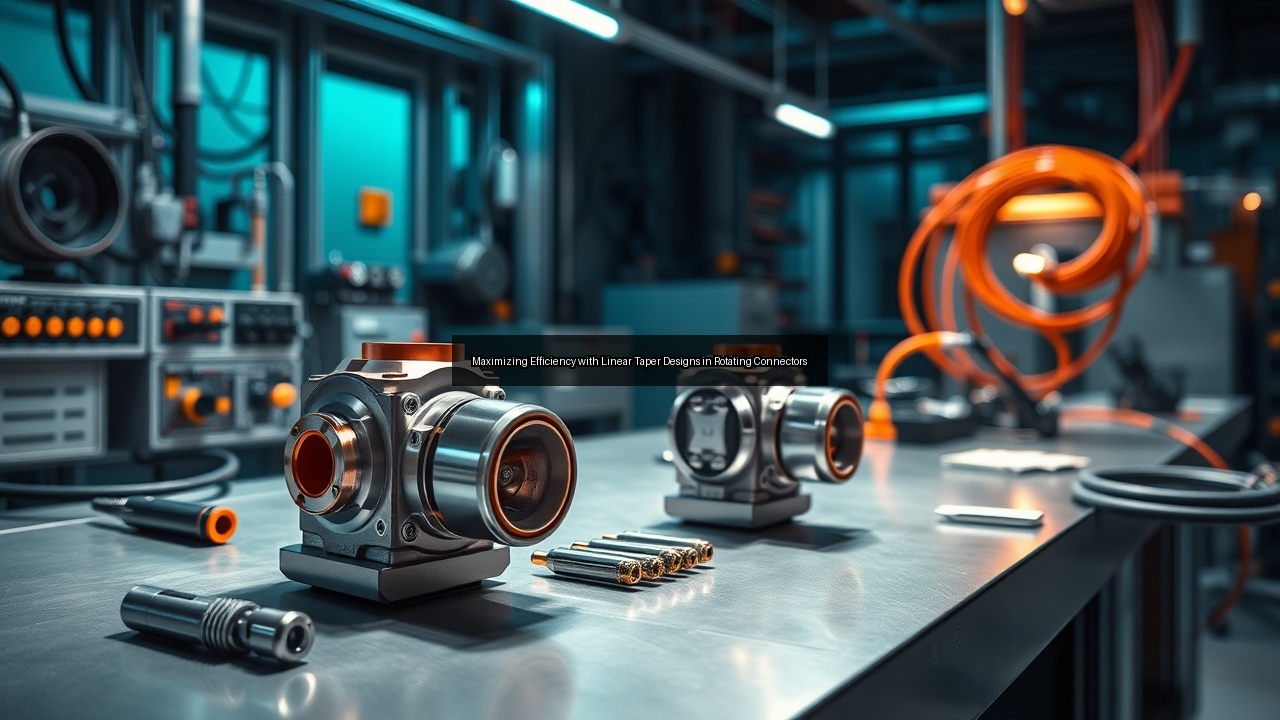
Understanding Linear Taper Designs in Rotating Connectors
What are Linear Taper Designs?
Linear taper designs shape the contact surfaces inside rotating electrical connectors with a gradual, straight-line reduction in diameter along the axis of rotation. This geometry creates consistent pressure distribution across rotary electrical contact points. Engineers machine the taper into both male and female components so the interface maintains uniform force even as the connector spins at varying speeds. The result eliminates the high-stress edges common in cylindrical or stepped profiles. Manufacturers achieve this through precision CNC turning followed by specialized polishing that leaves a mirror finish on the tapered surfaces.
Material selection plays a central role. Copper alloys plated with silver or gold resist oxidation while preserving low electrical resistance. The taper angle typically ranges between 1 and 3 degrees, a range proven to balance insertion force against long-term stability. When assembled, the design allows slight axial float that compensates for thermal expansion without losing contact integrity. Technicians install these connectors in environments where vibration and continuous rotation occur simultaneously, such as wind turbine hubs and robotic arms. The linear taper therefore serves as the foundational geometry that enables higher rotational speeds without sacrificing conductivity.
Benefits of Linear Taper Designs in Electrical Connectors
Linear taper designs deliver measurable gains in electrical connectors by lowering contact resistance and extending service life. The uniform pressure created by the taper reduces micro-arcing, which directly improves signal integrity in data lines that pass through the rotating electrical connector. Maintenance crews report fewer instances of intermittent faults because the geometry self-compensates for minor wear. Heat generated at the interface dissipates more evenly, allowing higher current loads before temperature limits are reached.
Assembly time decreases because the tapered lead-in guides mating halves into alignment without specialized fixtures. This feature proves especially valuable on production lines where operators connect multiple rotating electrical connectors per shift. In addition, the design accommodates slight angular misalignment between rotating and stationary sections, reducing the need for precision mounting brackets. Overall system efficiency rises as power losses at the connector drop and downtime for inspection shrinks. These combined advantages make linear taper technology the preferred choice for engineers seeking reliable performance in demanding rotary applications.
The Role of Rotating Electrical Connectors in Modern Technology
Applications in High Voltage Systems
Rotating electrical connectors equipped with linear taper contacts handle high voltage transmission in industrial and utility settings. Wind turbine nacelles, for example, route 690-volt three-phase power through slip rings that must rotate continuously for years. The taper geometry keeps contact force stable even when thermal cycling causes shaft expansion. Substation switchgear uses similar connectors to transfer power between fixed bus bars and rotating disconnect blades. In each case the linear taper prevents localized heating that could degrade insulation or trigger flashover.
Engineers specify these connectors when peak voltages exceed 1 kV and continuous rotation is required. The design supports both AC and DC circuits, provided creepage distances meet applicable standards. Field data shows that linear taper slip rings maintain dielectric strength longer than traditional cylindrical contacts under identical high voltage stress. This reliability translates into fewer unplanned outages and lower replacement costs for utility operators.
Integration with Wireless Technology
Modern rotating electrical connectors integrate power and data pathways that support wireless technology overlays. A single unit can deliver 480-volt three-phase power while simultaneously passing Ethernet or CAN bus signals through separate linear taper channels. This combination eliminates the need for separate slip rings dedicated to control circuits. Antenna masts on mobile platforms use such hybrid connectors to supply power to amplifiers mounted on rotating platforms while streaming telemetry back to base stations.
The taper geometry maintains low-noise electrical paths essential for sensitive RF circuits. Because contact resistance remains stable, voltage drop on power lines stays minimal, protecting downstream electronics from fluctuations that could interfere with wireless protocols. System integrators therefore specify these connectors when both energy delivery and real-time data exchange must occur across a rotating interface without bulky cable loops or external wireless bridges.
Advantages of Using Slip Rings
Slip rings built on linear taper principles offer continuous rotation without cable twisting or brush wear associated with older designs. The taper distributes mechanical load evenly, allowing higher rotational speeds before vibration becomes problematic. Maintenance intervals extend because the contact surface wears uniformly rather than developing flat spots or grooves. This characteristic reduces replacement frequency in packaging machinery and medical imaging gantries that operate around the clock.
Electrical performance improves as well. Lower contact resistance means less energy lost to heat, which in turn permits smaller conductor cross-sections and lighter overall assemblies. The design also tolerates moderate contamination from dust or oil mist without immediate failure, an advantage in food processing and outdoor installations. Operators gain predictable uptime and simplified spare-parts logistics when they standardize on linear taper slip rings across multiple equipment platforms.
Maximizing Efficiency with Linear Taper Designs
Improving Speed and Performance
Linear taper contacts raise the maximum safe rotational speed of rotating electrical connectors by minimizing dynamic imbalance. Traditional flat-face designs develop uneven wear that creates runout; the taper counters this tendency by maintaining line contact even after thousands of hours. Test rigs demonstrate speed increases of 30 percent before temperature or vibration limits are reached. Higher speed capability allows direct-drive motors to operate at optimal RPM ranges without intermediate gearing, cutting both component count and energy consumption.
Performance metrics also improve at the electrical level. Consistent contact pressure keeps resistance variation below 0.5 milliohms across the full speed range, preserving waveform integrity for servo feedback signals. Engineers therefore achieve tighter control loops and faster acceleration profiles in automated machinery. The net result is greater throughput without added cooling or larger motors, directly boosting overall equipment effectiveness.
Reducing Wear and Tear in Rotary Electrical Contacts
The linear taper geometry reduces wear rates in rotary electrical contact surfaces by spreading mechanical stress over a larger effective area. Instead of point or line loading that accelerates material removal, the taper creates a controlled band of contact that migrates slightly with each revolution. This migration prevents the formation of deep grooves that eventually cause open circuits. Laboratory measurements indicate wear volume reductions of up to 60 percent compared with cylindrical contacts under identical load and speed conditions.
Lubrication intervals lengthen because debris generated by wear stays suspended in the lubricant rather than embedding in the contact zone. When maintenance does occur, technicians simply reapply a thin film of conductive grease without disassembling the entire connector stack. The cumulative effect is longer mean time between failures and lower total cost of ownership for equipment that depends on continuous rotation.
Optimizing Wiring and Adapters
Linear taper connectors simplify wiring layouts because their compact axial length reduces the space needed for cable routing around the rotation axis. Adapters that transition between different conductor sizes or shielding types mate cleanly with the tapered interface, eliminating the need for bulky junction boxes. Installers route power and signal cables through a single central bore rather than multiple offset harnesses, cutting both material cost and assembly labor.
Strain relief features molded into the adapter bodies protect conductors from flex fatigue at the entry point. Color-coded keying prevents incorrect mating during field service. These details allow rapid reconfiguration of rotating electrical connector stacks when equipment undergoes upgrades or sensor additions. The result is a cleaner, more serviceable installation that maintains electrical performance while accommodating future expansion.
Comparative Analysis of Rotating Connector Designs
Linear Taper vs. Traditional Designs
Linear taper rotating connectors outperform traditional cylindrical and stepped designs across multiple performance categories. Cylindrical contacts concentrate force along a narrow band that quickly develops wear ridges, whereas the taper maintains distributed pressure that preserves surface finish. Stepped designs require exact axial positioning to achieve full contact; the taper tolerates several millimeters of float without measurable resistance increase. Field comparisons in packaging lines show linear taper units lasting 2.4 times longer before resistance exceeds acceptable limits.
Installation also differs. Traditional connectors often need shims or adjustable mounts to achieve proper alignment. Linear taper versions self-center during mating, reducing setup time and eliminating alignment errors that cause early failure. Although initial unit cost runs slightly higher, the reduction in downtime and spare-part consumption yields a clear return on investment within the first year of operation.
Impact on Connection Stability and Reliability
Connection stability improves markedly when linear taper geometry replaces older profiles. Vibration testing reveals that tapered contacts maintain continuity through 50 g sinusoidal sweeps where cylindrical contacts drop out at 35 g. Thermal cycling from -40 °C to 125 °C produces negligible resistance drift because the taper compensates for differential expansion. Reliability data collected from wind-farm fleets indicates mean time between connector replacements exceeds 60,000 operating hours for linear taper units versus 25,000 hours for legacy designs.
These stability gains translate directly into higher system availability. Critical processes such as semiconductor wafer handling or medical CT scanning experience fewer interruptions when rotating electrical connectors incorporate the taper. Predictive maintenance algorithms can therefore focus on other components rather than expending resources on frequent connector inspections.
Future Trends in Rotating Electrical Connectors
Innovations in Linear Taper Technology
Emerging innovations refine linear taper technology with advanced coatings and embedded sensors. Diamond-like carbon films applied to the taper surface further reduce friction and virtually eliminate adhesive wear. Integrated fiber-optic channels run parallel to the electrical paths, enabling high-bandwidth data transmission without additional rotary joints. Additive manufacturing now produces complex internal cooling channels that keep contact temperatures lower during extreme duty cycles. These developments push maximum continuous speeds beyond 10,000 RPM while preserving the core mechanical advantages of the taper geometry.
Smart variants incorporate strain gauges and temperature sensors that transmit real-time health data through the same connector. Operators receive alerts before resistance rises enough to affect performance, shifting maintenance from scheduled to condition-based. Continued material science advances promise even lighter, higher-current versions suitable for electric aircraft and high-speed rail applications.
The Growing Demand for Advanced Connectors
Market demand for advanced rotating electrical connectors continues to rise as industries automate and electrify. Robotics, renewable energy, and medical imaging each require connectors that deliver more power and data through smaller envelopes while surviving longer service intervals. Linear taper designs meet these requirements more effectively than legacy approaches, driving adoption across new equipment platforms. Supply-chain analysts project annual growth above 8 percent through the next decade, fueled by both replacement cycles and greenfield installations.
Standardization efforts now focus on modular taper angles and common mounting interfaces so end users can mix and match power, signal, and fluid channels within a single connector body. This flexibility reduces engineering time and inventory complexity. As demand scales, manufacturers invest in automated production lines that maintain the tight tolerances required for reliable taper performance at competitive prices.
See Also
- Revolutionizing Wireless Technology with Advanced Rotating Electrical Connectors
- Innovative Adapters for Seamless Integration of Rotating Electrical Connectors
- The Essential Guide to Choosing the Right Rotating Electrical Connector
- Understanding the Mechanics Behind Rotating Electrical Connectors
- How Slip Rings Transform Rotating Electrical Connectors for Modern Machines